
Currently Empty: ₹0.00

Accurate measurement is the foundation of quality craftsmanship and engineering. Whether you’re working in manufacturing, machining, construction, or quality control, reliable measuring instruments are essential to ensure precision and consistency.
What Are Measuring Instruments?
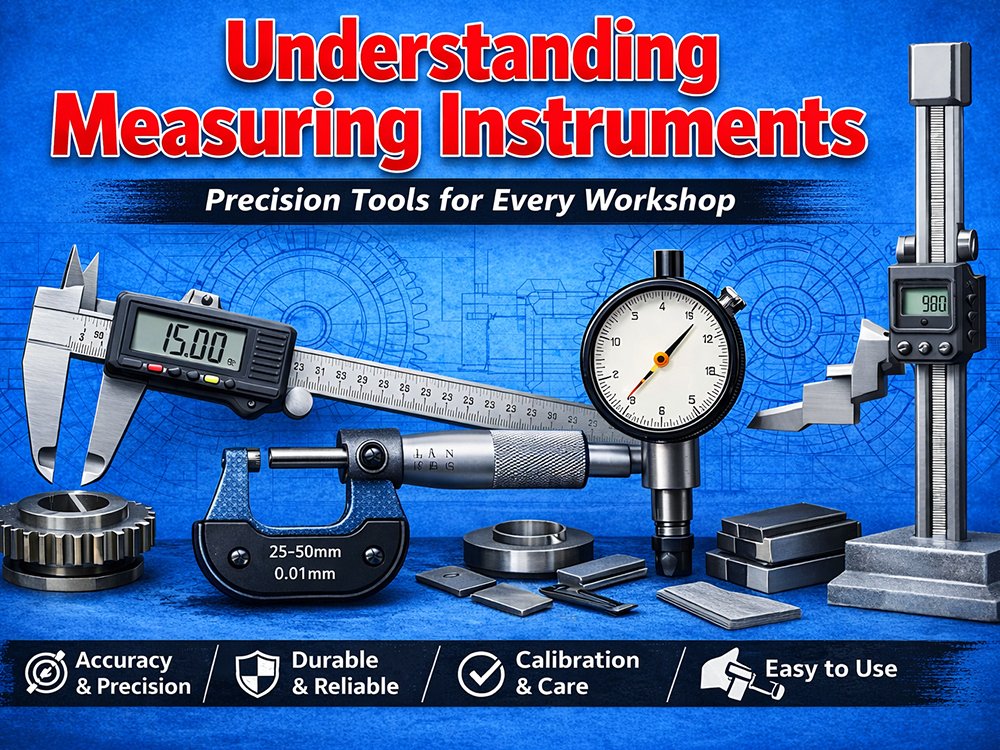
Measuring instruments are tools used to quantify physical quantities such as length, thickness, diameter, and depth. Common examples include:
- Vernier Calipers: For measuring internal and external dimensions with high accuracy.
- Micrometers: Specialized tools for very precise measurements, often used in machining.
- Dial Gauges: Used to measure small deviations and ensure parts are within tolerance.
- Height Gauges: For measuring vertical distances and marking items during fabrication.
Why Precision Matters
Inaccurate measurements can lead to poor product quality, wasted materials, and even safety risks. Using precise measuring instruments ensures that components fit correctly and perform as intended.
Choosing the Right Measuring Instrument
When selecting measuring instruments, consider:
- Accuracy and Resolution: How fine the measurement increments are.
- Durability: Tools made with robust materials for industrial use.
- Ease of Use: Clear markings and ergonomic design for efficient work.
- Calibration: Regular calibration is vital to maintain accuracy over time.
Maintaining Your Measuring Instruments
To keep your tools reliable:
- Store them in protective cases.
- Clean regularly to prevent dirt and corrosion.
- Avoid dropping or rough handling.
- Get calibrated periodically by professionals.
Conclusion
Investing in high-quality measuring instruments is critical for any professional or hobbyist focused on precision. Reliable tools save time, reduce errors, and improve overall quality — making them indispensable in workshops and industries worldwide.